Machakos – The quest starts

The quest today is to find the first home of Emilie May and Fred at Machakos, 46 miles south east of Nairobi armed with this diary entry of 8th March 1924:

‘After a cup of tea we started to our first home. It was awfully thrilling and the road is a very romantic one. After leaving the Fever Hospital it spears to go straight out into the blue towards some distant hills over the plains. The road was not too bad to start with… We rounded a bluff which appears to guard the entrance to a new country, a country of rolling hills. We passed one or two farms and a lovely field of wheat. We saw 2 rows of white buildings, the hospital, a very small red brick bungalow which is the Drs, the red brick DC’s house set off from the road on the left and presently our house… We went up the drive with a semicircular piece of lawn to a long shaped house.’

Finding the house is one challenge, another is getting out of Nairobi. We stop a long while beside the National Archives for an accident to resolve between two micro buses kissing. In this changeable world, constants are nice but not this time. We wait nearly half an hour. The preacher is back on his spot with maybe the same crowd or those who emptied out of the stationary buses. Apparently the two vehicles ‘scratched each other’ – it’s baffling how anyone could tell a new scratch from all the existing ones!

Finally we clear Nairobi and head off down the Mombasa Road – the same road Emilie and Fred set out on that day. Will any of it be recognisable now?

The road is hardly romantic now. It is still dead straight over the plains and the hills scarcely an outline in the pollution from the lorries that stuff the dual carriageway. A large hospital, ageing badly that it could be anything from 30 to 90 years old is the left just before the unbuilt Nairobi bypass. Nairobi’s expanding population has swarmed into breeze block apartments that line the route – one optimistically called ‘South Park’. We move at a slow pace. At Athi Bridge, 16 miles from Nairobi, a welcome new bridge is being built, but it will be too small to cope with today’s capacity let alone the future. We go round the bluff, a prominent bare rock promontory into an area of rolling hills.

Machakos town sprawls two or three miles outside it’s envelope, but at the denser housing we encouragingly pass some low white bungalows. The ones she mentioned? They are in European style. We come to a roundabout with the Governor’s Office to the left and across a high white wall. There are no signs for a hospital. We follow a Mafuta or motorcycle bus along the high wall to the hospital – apparently in it’s original space but now big and unrecognisable, the town has grown into a jumble of breeze block dukas and kiosks full of the noise of buses, cars and motorbikes. Had we come in the original road? We see some old European- style bungalows on a lane off right – one a hotel – we ask there. A man suggests asking at the Governor’s Office.

We circle back and I get out to ask. The Director lives up there, I’m told. He’s busy reading his newspaper so I wait a while. His secretary Mary tells me that the DC’s house and other old houses were still there about half a mile from the roundabout so I left the busy Director in peace to go on with the quest.

We passed the wall to our right – actually the hospital wall – and a little way on the road becomes a shady street with big trees, grass verges, and flowers. People sit under the trees chatting. A red brick house, called DC’s House, is set off on the left, up a sweeping driveway to a handsome colonial bungalow set in a garden with lovely old trees, flowering Bougainvillia in purples, whites and reds and Canna lillies in flower beds.
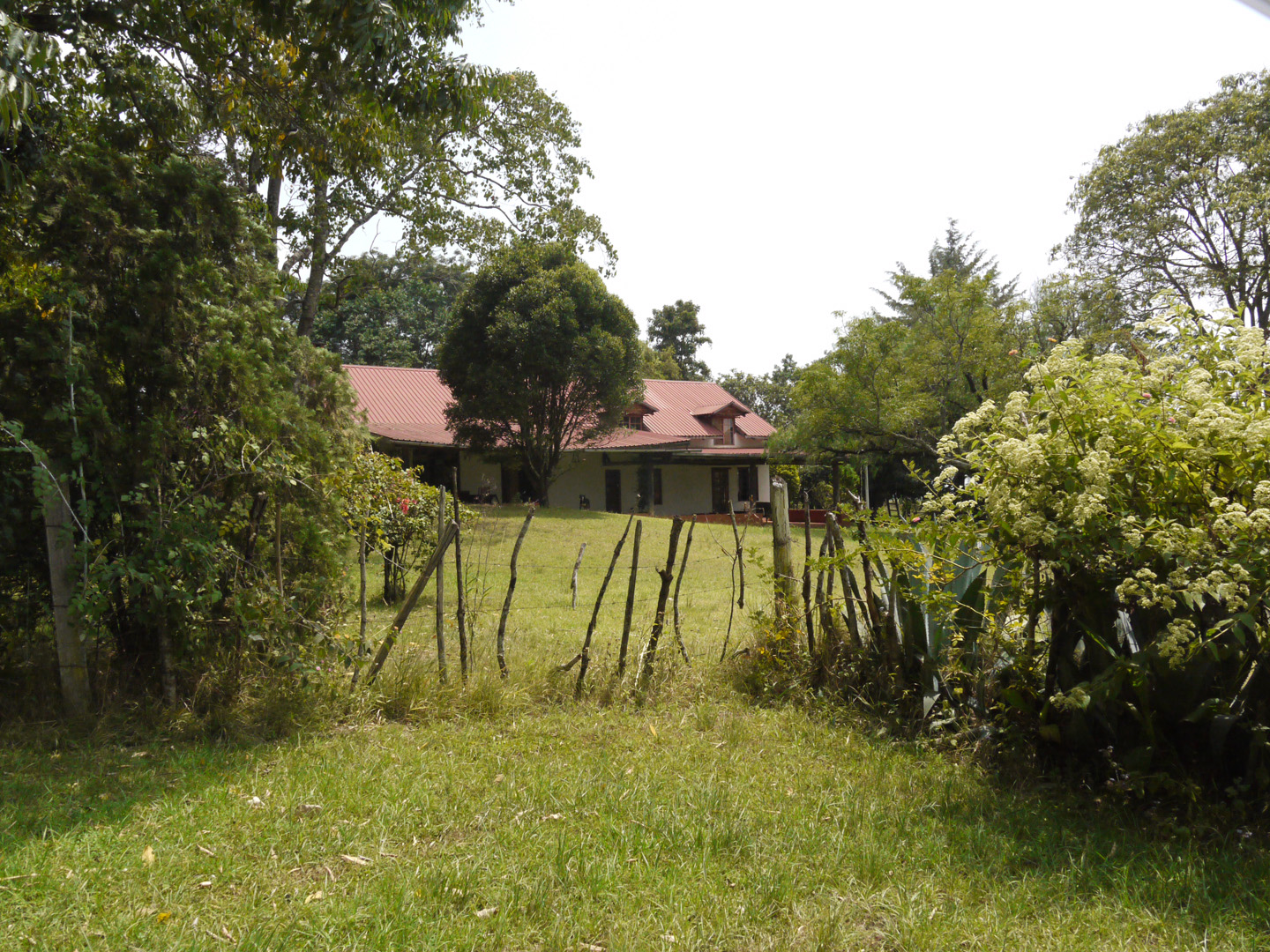
DC House MachakosExpectation is high. We go on. In the next space, that for my grandparents first house, are three Nissan style newish bungalows. I guess their house was knocked down. Nevertheless, compared to the clogged streets and impermanent buildings of the town this is still a lovely place where Monica, Valerie and my mother were born. The photo was taken on Christmas day 1924 when Monica was days old.
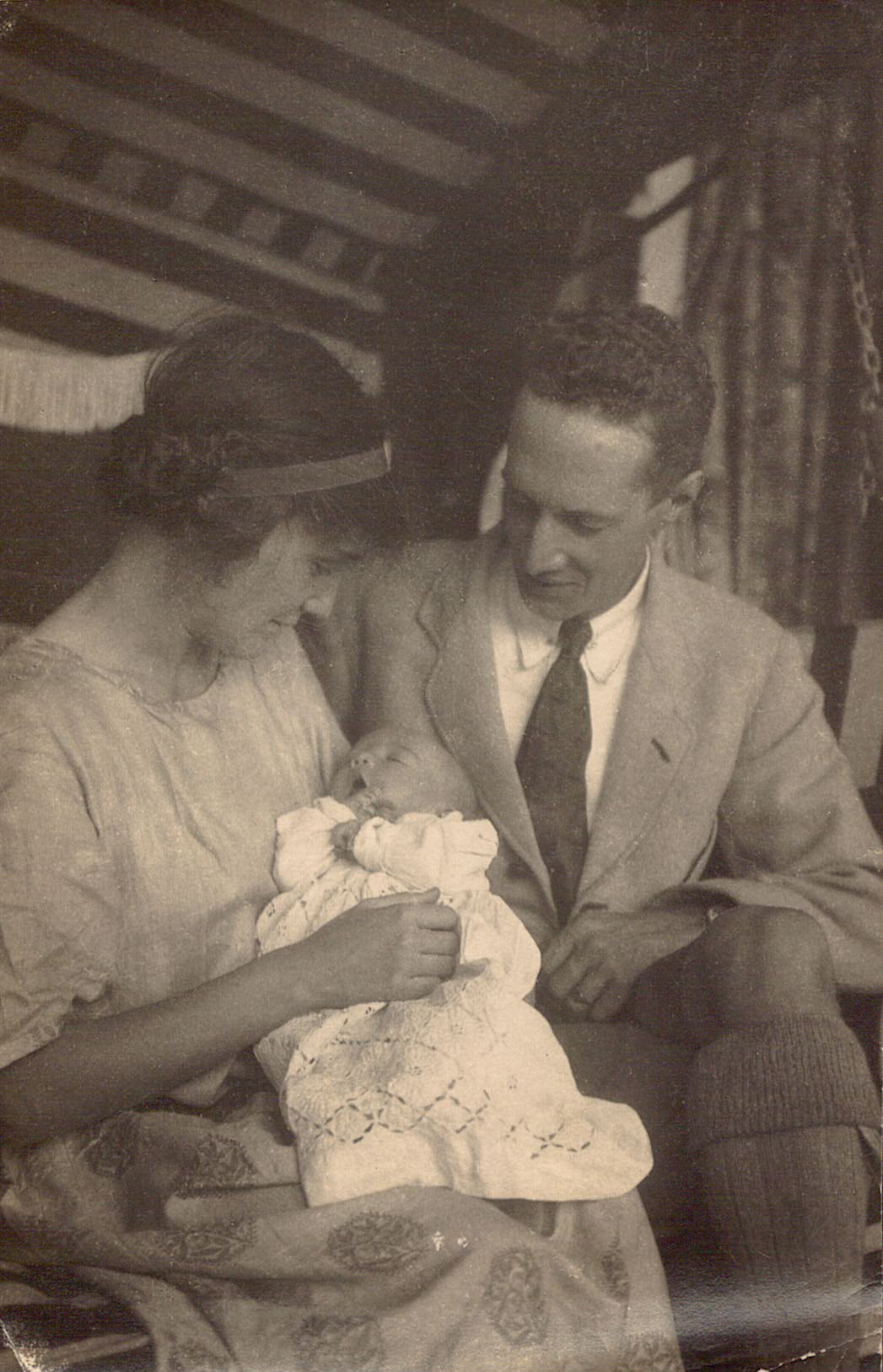
1924 Xmas Machakos first photo Parents & MonicaMission accomplished, we set off back to the Mombasa Road to find our hotel. The address is Mombasa Road, Katembu, some directions and GPS coordinates. We enter the coordinates and set off, expecting to be at the hotel within 30 minutes. We pass through Katembu onto the Mombasa road. There is no right turn within 500 metres, the next is over a mile away. For over an hour we take dirt tracks towards the GPS marker and ask everyone – no one has heard of our hotel.

We return to Nairobi and stay in a Convent in Karen – Robert’s suggestion. A great little place with a small white room, a cross high on the wall, and mosquito netting round a firm bed with soft pillows.
Posted in Kenya Blog: Kitale & KK | Tagged , | Comments Off on Machakos – The quest starts

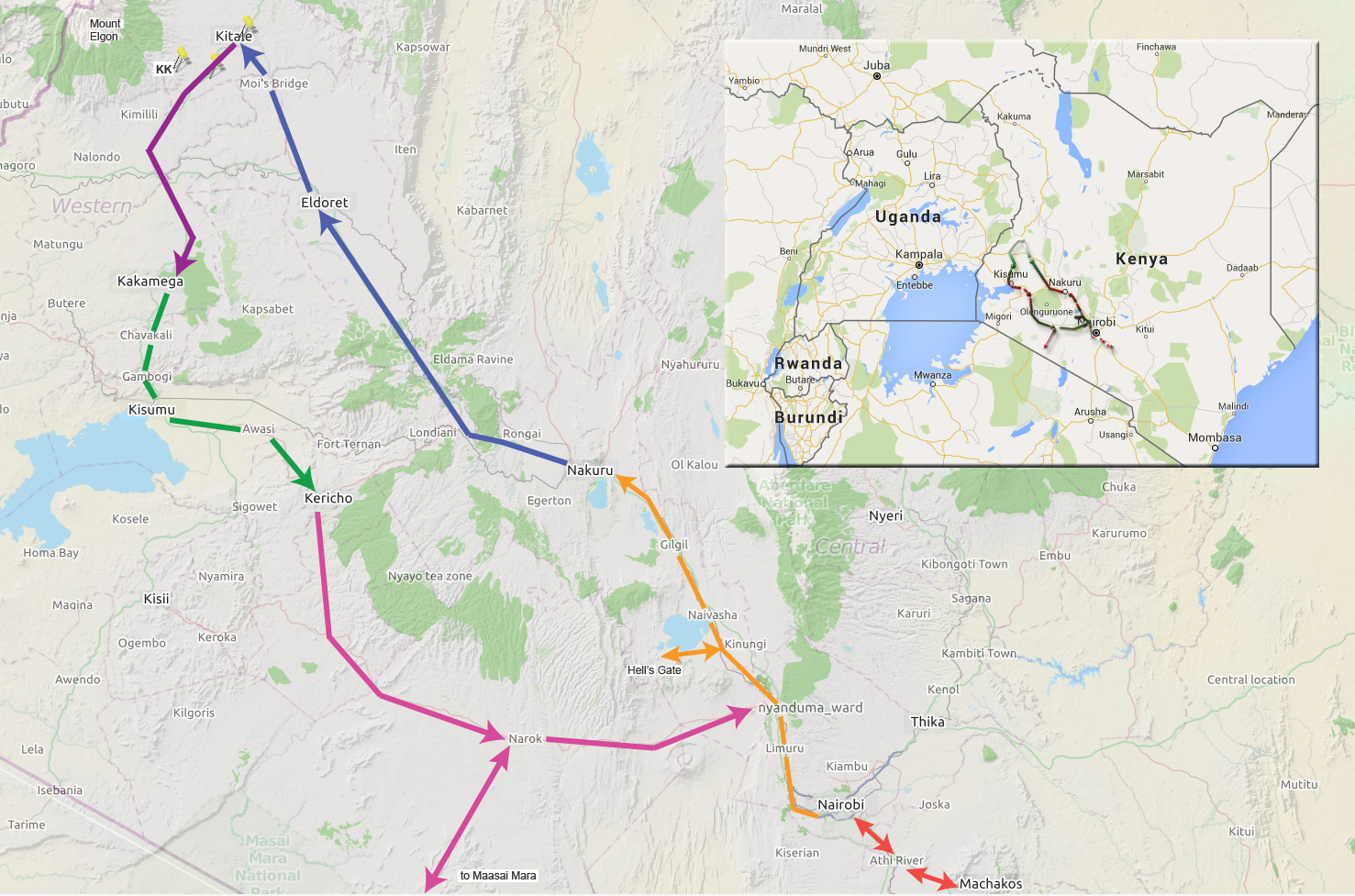
Maps of the Journey

KenyaMap

Posted in Kenya Blog: Kitale & KK | Tagged | Comments Off on Maps of the Journey

Day two – Nairobi

Today we managed two things:
Fighting the traffic to research the minute books of the Kenya Hoticultural Society 1927 – 1938, thankfully contained in three slim volumes. My expectations are low, which is good because there are only two mentions of Kitale horticultural association – asking permission to be an affiliate branch on 6th January 1928 and in July 1930 noting that Kitale HS was particularly strong. It is clear that Kitale and the Trans Nzoia is very remote from Nairobi. There are even fewer mentions of my grandparents – a letter on 6th May 1932 from Emilie May asking to be considered as an apprentice judge – she must have been taken on as both she and Fred were listed as judges for the Lamuru horticultural show in the meting of 4th September 1936. There are many references to the Sutton Challenge Cups, given by Leonard Sutton (my great-grandfather) at the Nairobi Horticultural Show on 2nd December 1932. It was Emilie May’s great desire to win one of these but she never did.

Bumping along atrocious roads passed ribbon shanty to the Ngong Hills at the rim of the Rift Valley. Religion, health and education dominated the roadside adverts and buildings. Numerous schools linked to various saints and churches – Presbyterian, Anglican, Seventh Day Adventists, Kingdom focus Church, Redeemed church Gospel Rima, Deliverance Church Eldorator, Blessed Worship.

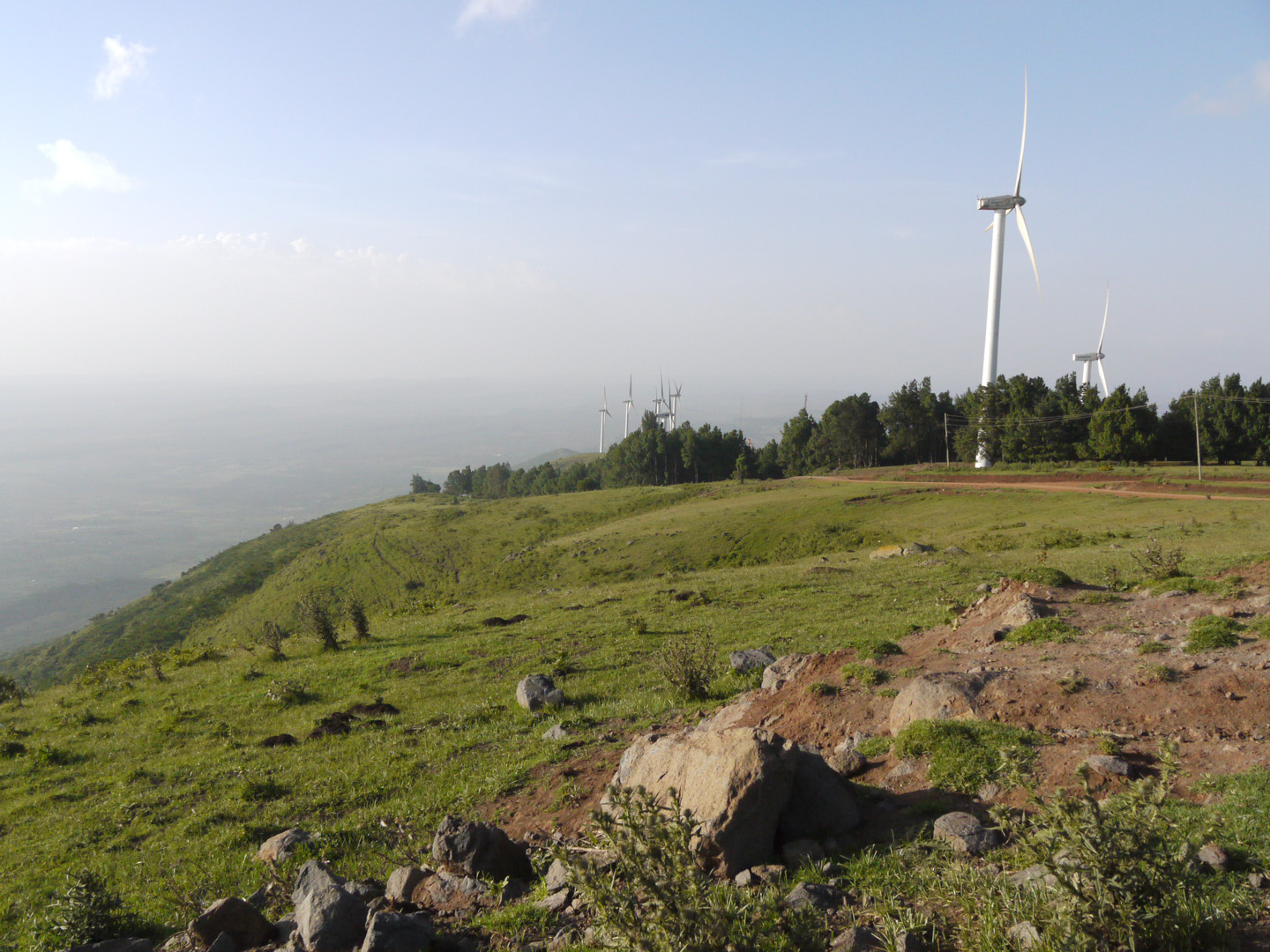
The road ended in a dirt road going along the rim of the Rift Valley. The late afternoon haze simmered blueish over the valley and the ridges beyond. Expectation and anticipation are funny things – perhaps I had expected something more dramatic after reading Emilie May’s letter of 6th March 1924:

‘then the road began to descent and unite suddenly we got a most stupendous view over the valley far below us and then some hills which looked like tiny ridges. It was too wonderful for words even at the time – the sort of awful quiet and remoteness which quite silence one.’

Ngong hills with turbinesPerhaps it felt anticlimactic because it was very hazy, and the swooshing wind from some dozen turbines towering 40 – 50 metres above us coupled with the stiff wind was distracting. These turbines reminded me of a journey from Turfan to Urumqi years ago, at the edge of the Taklamakan Desert.  That day in April we crested a hill andthe tops of the turbines rose like space ships in the arid brutal landscape. A sight so surreal I remember it as yesterday.

Posted in Kenya Blog: Kitale & KK | Tagged , | 1 Comment

Day one – Nairobi

In the hotel garden two sun birds play catch between the hibiscus, the orange beak of the East African thrush pecks for worms in the grass. The background music changes from upbeat jazz to something Richard Clayderman might play – inoffensive and easily ignorable and a world away from Nairobi’s hot dusty streets. In those streets, smart ladies in suits totter in ankle breaking heels along uneven pavements ignoring shabby disabled men asking for money and hawkers selling dusty ties, shoes, toiletries on mats. A large brown/black bird hovers above an acacia tree beside a stream strewn with rubbish. Bashed up micro-buses press in equal measure on the accelerator and the horn, the air thick with their black exhaust. Thin much washed shirt sleeves are the only cleaners on the bus windows. Even the bougainvillea flowers look grey. At every junction and roundabout the traffic waits, perhaps some will remain stationary long enough to read the books some of the hawkers sell car to car. Then a smart young man in a beautiful pink pressed shirt crosses the road in front of us – his shoes so shiny that a mirror could be dispensed with. It is a sight as welcome as water in the desert.

Privilege for the few versus poverty, the reality for the many, is stark in this city. The few are tucked away in Muthaiga, Karen or Westlands in high walled compounds imprisoned by security guards and high reinforced gates – or hotels like mine guarded by barriers, bomb detectors and security fences. The rich pay much to sleep easy in their beds here and drive locked in high SUVs. Only security guards and house help walk their green hushed streets.

We went to Nairobi centre – a bustling centre according to the guide book. They lie. Nothing bustles here. The people walk slowly, gracefully, the women clutching mobile phones or each other, chatting ceaselessly. We crossed many streets at will, green or red pedestrian lights, to reach the National Archives and MacMillan Central Library. The traffic is stopped patiently at every road junction, engines running. The place has the same feel, the same hot spicy smell mixed with petrol fumes, as other centres built by the British at the end of the 19th Century – Kuala Lumpur, Penang, Dar-es-Salaam and others I’ve not been to I expect. It’s KL’s Batu road without deep storm drains and Chinese kedai. Deep shady walkways with small shops offer anything you may want and much you don’t. It’s very walkable provided you watch your feet for uneven stone pushed up by tree roots, tree roots and open hatches for underground electricity bays. A large group of people are clustered round an invisible man. ‘An accident?’ – ‘No, a preacher’ says Robert, our driver.

At the National Archive research library I ask to see The East African Standard newspaper between 1926 – 1938. ‘Research permits cost 100,000 KSH for a year’. ‘I only need it for two hours.’ ‘Maybe one of the Researchers will lend you their permit, I’ll ask.’ The room is cool from one windows. Three older men sit at long wooden tables with piles of books. To the side are old dusty computers and much used mice. An old, thin man, a belt holding up well-gathered trousers, comes over to hear my request. He lays his hands on the reception table – long delicate fingers and clean worn cuffs. His eyes are faded from too many books in poor lighting, ‘The micro fiche are dim. Better to go to the MacMillan Library next to the Mosque. They have the originals.’ His faded voice match the research library.

We recross exhaust perfumed streets and down a long covered pavement in deep shade passed dukas selling the latest phones, wireless sound systems, men’s tailors, women’s clothing.

The public library was once a handsome place. A large imposing entrance in classic style built in 1930’s by sponsorship from lady MacMillan, the Governors wife. A few people sit at the dusty tables. Broken tables and chairs are piled in children’s book area. This library has not been stocked with books for many years. The librarian takes us into the basement filled with the smell of decaying print – silver fish must be flourishing in this forgotten uncherished history of this young nation. It’s not the history of the people in power now.

Research MacMillan LibraryFor three hours we pour over collected binders of newspapers, 1926, 1927, 1930, 1934, 1938 and inhale the preoccupations of the early settlers to the certainty of another war. The adverts react to their needs: Agricultural machinery, health products for tooth ache and cuts, guns, cars, cigarettes, shipping lines and sea mail deliveries, luxuries from home – Lipton tea, Quaker Oats, Brands of marmalade dominate in the early days. Later the adverts move to golf, running shoes for sports events, columns about dogs. The wireless begins to edge in. By 1934 it commands three columns and the radio programmes are printed, news of aeroplane flights and airmail overtakes sea mail, and the movement of swarms of red locusts across East Africa are tracked and broadcast. By 1938, there is little local news. The settlers farms are mostly in hock to the bank after the Great Depression and world commodity price collapse – the adverts reflect this. Farm sales, health preoccupations, times of sailings home dominate. There are no adverts for golf, guns or high end cars. No columns devoted to the care of dogs. The paper looks to the whole East African region and the whispered fear of war.

By late afternoon we call on Sylvia Davidson. Her father bought Kama Koia Farm in 1938. That year my grandfather held a shareholders meeting on 12th December 1938 to wind up Kama Koia Limited, the company that owned the farm. The shareholders were Frderick Chater Jack and his brother Arnold. The company wound up on 4th January 1938 and the family sailed for England eight days later taking the train from Kitale through Nairobi to Mombasa.

Sylvia Davidson mapSylvia is a sprightly 89 year old, as sharp as a tack. Her father, Mr Gantz, came to Kenya in 1936 to hunt big game and decided to stay. The family, including 12 year old Sylvia, followed in 1938 – the same year he bought Kama Koia Farm. It cannot be a coincidence that that is the same name as my grandparent’s farm. I know from Notices in the Kenya Gazette that there was a meeting of shareholders of Kama Koia Farm Ltd on 12th December 1938 and that the company was wound up on 4th January 1939. Fred, Emilie May and the four girls left Kenya for ever on 12th January 1939.

“The farm is not near the Kama Koia River. There was no house or gardens there and no vegetables or horticultural business.” She said taking a large area map with land registry numbered plots. We orientate it to Emilie May’s schematic sketch map that she sent to her father. The Kama Koia Farm that the Gantz family bought could be a subdivision of the Kama Koia Farm owned by my grandparent’s and the timing looks more than coincidental. Amazing.

Sylvia invites us to the Muthaiga Club, the oasis that Fred and Emilie May escaped to for all-night dancing, fine dining, champagne and Society – the high life they both aspired to. Children were not allowed so they remained at the farm in the care of the nanny. The club was established in 1914 and by 1933 it cost 300/= KSH per year to be a member and had 500 members. Its president was Lord Delamere, head of the so-called fast Happy Valley set. Today the club still oozes privilege and money. The golf course is still there, but is now separated from the club. We are signed into a book by Sylvia ‘Don’t dance in the tables or break anything, I’m responsible for everything you do.’

The male only Members bar is now part of the dining room – jackets required, women in smart casual dress – and the ballroom is used for concerts such as a piano concert a couple of days ago that Sylvia went to. It’s hard to imagine the dances in the partially lit room I saw. Things have changed these days, women are welcome in The Members Bar and children can go to the new Pinks pool and restaurant building to the back.

I order a pink Gin, it seems fitting for the surroundings, and it arrives with hot cashew nuts. The dark wood panelled room looks out over a wide shady verandah with members having sundowners. The Muthaiga Club is modernised, but didn’t take much imagination to see game hunters and settlers having sundowners around us. Indeed young man in khaki bush trousers buckled into a smart leather belt and loose shirt comes in with round canvas bags. He’s bronzed, lithe of body and looks just the part. ‘A large pink gin,’ he orders and gives his membership number. “I’ll just freshen up.”

It’s still the place of privilege and status, but the money is equal and everyone can join who can afford the eye watering cost. To protect them, security is obvious and high with barriers at the gates, bomb detection checks and high wire topped with razor wire all round.

Tomorrow we start the quest to find Emilie May.

Posted in Kenya Blog: Kitale & KK | 1 Comment

Finally leaving England

The ‘Guildford Castle’ spent January 31st at anchor off Tilbury in thick fog which did not lift until the ship was passing the Isle of Wight the next morning. By coincidence, our journey to Nairobi also started on February 1st, on the same day separated by 92 years, that my grandmother Emilie May Sutton started her journey.  That’s the only similarity in the journey.

It took another twenty-five more days before Emilie May reached Mombasa, and two days more until the train pulled in to Nairobi station at 12:30. We will fly for 8 hrs in the Jomo Kenyatta International Airport, we will queue for quite some time to be fingerprinted and processed into Kenya. My grandmother’s arrival was altogether better:

‘The entrance to Mombasa is quite one of the most beautiful things I’ve see, and I feel it quite useless to try to descript it. Anyway, we steamed right up to the land – so close, that I could recognize Joyce on her verandah, and was almost certain of Fred in a car. Then we turned sharp left, and kept close in under the land and cars and motor bikes kept level with us round the side of the island. We finally anchored off Kilindini, and at once the doctor’s launch came alongside, followed immediately by the Police one. I could see Fred sitting in it, and then he came on board, exactly after Capt. Scott Higgins, who is the Policeman. Oh, it was quite too wonderful. We went to the cabin – etc!!! The rest is left to your imagination. Anyway it was only about 7 o’clock when he came on board. We had plenty of time, and got my emigration form and passport done.’

Emilie May’s letter to her father on 25th February 1924

We queued for over an hour at immigration and were very thankful to meet the lady from  the Norfolk Hotel and leave the airport. Travel is faster these days, but it has certainly lost its romance and much of its appeal. Since Emilie May’s reception after her wedding was at The Norfolk, it seems fitting that we should too. It’s still one of the best hotels in Nairobi.

On 1st March 1924, Emilie May Sutton married Frederick Chater Jack at St John’s Church, Parklands. The ship had never caught up the two-day delay at the start and the wedding was delayed.
01-03-1924Marriage invite1

Posted in Kenya Blog: Kitale & KK | Comments Off on Finally leaving England

Setting Out

Today is 30th January 2016 and I’m reminded that it is exactly 92 years since  my grandmother, Emilie May Sutton, caught the 10.00 am train to Paddington, London, in freezing fog with her father Leonard Sutton and her brother Noel. The railways strike had ended at the previous midnight but the boat train was not running. ‘We took a bus from Rikards [near Paddington Station], as there was no boat train owing to the railway strike – only charabancs from St. Pancras – a long drive all thro’ the city & down Commercial Road to East India Dock.’ There she boarded the “Guildford Castle” bound for Mombasa, expecting to sail late that afternoon to marry a man she hardly knew and start a new life in Kenya. She was 24 years old.

She put the wedding cake into cold storage on the boat, had lunch with her family, Fred’s father and cousin, and waved goodbye to them in mid-afternoon, except her chaperone Fred’s aunt Hilda Parkinson. Emilie May started the first page of her diary to record events from the sea journey to marriage, married life and the birth of the first child: ‘At 6:15 we shipped anchor & went out into the middle of the Dock but there was still a very thick fog & when we came back from dinner we found ourselves back by the side again. Very depressing. The cabin is very nice & I got fairly comfortable on the top berth.’ Unfortunately not quite the exciting start she was hoping to record.

I have that diary and many of her letters to her father (and some of his to her) until June 1932. They were stored unopened in an attic for over 30 years in a dispatch box sized tin chest, exactly square and squat in unadorned dull grey metal, until I found out about them in a chance conversation. There was no huge old padlock or lock requiring a fantastical ornate key, only a small metal catch to help lift the lid. There was no writing on the box. No name. No instructions. No ‘Not To Be Opened Until After My Death’. Nothing. It was not spectacular at all and I could see why it had been ignored for all these years. Its ordinary smallness was its most distinguishing feature.

The chest’s contents spanned more than a century. Each envelope had a written note in spidery blue ink of its contents on the outside. I recognised my Grandmother’s distinctive style. Inside, the contents were collated around an individual subject, event or person. Every letter and every photograph had explanations or names, usually identified by initials, written at the top of the letter, in the margin or on the back. Into this chest went her mother, her father, her brothers, her husband, her children, herself: my Granny’s world collapsed and ordered into a tin chest.

It did seem a bit surprising Granny chose such a very small container to record so many lives and so many events. Each deposit appears chosen for a reason and consciously saved. But during her life, my Grandmother had never talked about Kenya, her husband or her father — nor were there any artefacts, paintings or photographs referring to Kenya.

I took the contents of the chest and another back home. It seemed such an amazing story about an austere dour woman I knew well because I spent much of my childhood in her house — quite different from this young woman eager on the advent of an adventure. I resolved to go to Kenya and find Emilie May.

Posted in Kenya Blog: Kitale & KK | Comments Off on Setting Out

The Founding of The Western Academy of Beijing, Part II

The Founding of The Western Academy of Beijing part II>more…

Published in Lianxi in September, 2014

Posted in Published Writing | Tagged , , , | Comments Off on The Founding of The Western Academy of Beijing, Part II

The Passing

The Passing

Posted in Uncategorized | Leave a comment

The Founding of The Western Academy of Beijing, Part 1

Founding story of WAB, Part 1

Story of WAB_part1>more….

Published September 1st 2014, Western Academy of Beijing Lianxi

Posted in International Press, Published Writing | Tagged , , , | Leave a comment

Jo Sargent, founding teacher at WAB

Western Academy of Beijing Lianxi : biography of Jo Sargent

WAB Alumna Teacher Profile: Jo Sargent | Lianxi>more….

Published in 2012 in Western academy of Beijing Lianxi

Posted in International Press, Published Writing, Uncategorized | Leave a comment